Foundation Inspection
An evaluation that tells you whether the movement you are seeing is cosmetic, active, or structural — before anyone quotes you for piers.
Foundation InspectionMost Texas foundation movement is caused by expansive clay soil changing volume with moisture — not by bad construction. What matters is whether the movement is active, how far it has gone, and whether the water causing it has been dealt with.
We connect homeowners with independent licensed foundation contractors, and we publish the information you need to judge their advice.
We connect homeowners with independent, licensed foundation contractors. Pricing, availability and the work performed are the contractor’s responsibility.
Houston Black clayPlasticity index 40–60. Codes call soil expansive at 15.
Drought then downpourThe cycle that moves slabs, not steady weather.
Foundation repair means restoring support beneath a structure that has moved, and stopping whatever caused the movement. In Texas that nearly always means two separate problems: correcting the elevation of the house, and correcting the water behaviour around it. Fixing the first without the second is how homeowners end up paying twice.
The mechanism is straightforward. Clay soils rich in montmorillonite absorb water and swell, then release it and shrink. Under a house this does not happen evenly — a shaded north elevation holds moisture while a south-facing wall above a sun-baked flower bed dries out, or a leaking supply line saturates one corner. The result is differential movement: part of the structure rises or falls relative to the rest. That differential is what cracks brick, racks door frames and separates trim, not the absolute amount of movement.
Which repair applies depends mostly on how your house is built. Slab-on-grade homes, which cover the large majority of Texas housing built since the 1960s, are corrected by underpinning the perimeter or interior with piers driven to stable bearing strata. Older homes on pier and beam construction have a crawl space, and are corrected by adjusting or replacing supports and repairing the wood framing above them.
Not every house with cracks needs piers. Some need drainage correction and nothing else. Some need a plumbing leak found. Some need monitoring over a season to establish whether the movement is still active. A good evaluation tells you which of those you are looking at.
Eight distinct problems, each with its own page explaining what the work involves and when it is warranted.
An evaluation that tells you whether the movement you are seeing is cosmetic, active, or structural — before anyone quotes you for piers.
Foundation InspectionUnderpinning and lifting for slab-on-grade homes, the foundation type under the large majority of Texas houses built since the 1960s.
Slab Foundation RepairCrawlspace work on older Texas homes: shimming, pier replacement, sagging joists, rotted sills and the moisture that caused it.
Pier & Beam RepairThe lift itself — elevation surveys, how much movement can safely be recovered, and why a house is rarely returned to dead level.
House LevelingReading cracks properly: which ones are shrinkage, which signal active movement, and which need sealing versus structural correction.
Foundation Crack RepairIn Texas clay the water is the cause. Grading, French drains, gutter routing and the watering practice that keeps soil moisture even.
Drainage SolutionsBeams, joists, load-bearing walls and framing — the structural half of the work, including repairs that follow a foundation lift.
Structural RepairsWhat happens to drywall, tile, trim and doors after a house is lifted, and how the cosmetic recovery is sequenced.
Post-Repair RestorationA starting point for narrowing down the problem — not a diagnosis. Several of these have causes that have nothing to do with the foundation.
| What you notice | Commonly indicates | Where to read next |
|---|---|---|
| Stair-step cracks through brick mortar joints | Differential movement along that elevation | Crack repair |
| Doors that stick seasonally, then free up again | Soil moisture cycling; often not yet structural | Drainage |
| Doors or windows permanently out of square | Movement that has not reversed | House leveling |
| Sloping or bouncing floors over a crawl space | Failed supports, sagging joists or rotted sills | Pier & beam |
| Gaps opening between trim, cabinets and walls | Framing racking as the structure moves | Structural repairs |
| Cracked slab visible in a garage or under flooring | Needs assessment — may be shrinkage | Inspection |
| Water standing near the house after rain | Grading or drainage fault feeding the clay | Drainage |
| Unexplained rise in the water bill, warm floor spot | Possible under-slab plumbing leak | Inspection |
A wall bulging or leaning, a floor that has dropped suddenly, a beam that has visibly rotated, or a new crack wide enough to pass a coin through are not things to monitor. Leave the structure and get a professional opinion the same day.
Photograph each crack next to a ruler or coin and date the photo. A second set in three months tells an evaluator more than any single inspection can, because it shows whether the movement is still active.
Texas has an unusually large share of homes sitting on soil that changes size. The Blackland Prairie runs in a broad arc from the Red River down through Dallas, Waco and Austin toward Bexar County — roughly 12.6 million acres according to the Texas Almanac. Its dominant soils, the Houston Black and Austin series, are Vertisols: dark, montmorillonite-rich clays that the USDA-NRCS records at a plasticity index of 40 to 60.
That number is the whole story. Building codes treat soil as expansive at a plasticity index of 15. Blackland clay runs two to four times that threshold. Soil surveys from Ellis County document cracks up to four inches wide and six feet deep opening during extended dry periods, with seasonal volume change of three to six inches in the upper ten feet of the profile.
The Houston Black series has a property that catches people out: water enters it rapidly when it is dry and cracked, and very slowly once it is moist. During a long dry spell the clay contracts and fissures open. The first heavy rain pours straight down those fissures and swells the soil from below, fast and unevenly. Then the surface seals, and subsequent rainfall runs off instead of soaking in — which is why yards on Blackland clay pond after storms.
Steady weather does comparatively little. It is the swing between extremes that moves houses, which is why Texas foundation seasons track drought cycles rather than rainfall totals.
From Houston west toward Corpus Christi the Coast Prairie covers roughly 8.7 million acres of younger marine sediments. Houston's “gumbo” clay is also highly plastic, but it comes with a high water table, so clay swelling and hydrostatic pressure act together. Drainage design matters more here, and the margin for error in grading is smaller.
El Paso, Lubbock and Amarillo sit on caliche and calcium-carbonate soils in an arid climate. Expansive clay is far less of a factor, and foundation movement in those cities more often traces to poorly compacted fill, landscape irrigation changing moisture in soil that is normally dry, or plumbing leaks. We say so on those city pages rather than pretending every Texas address has the same problem.
Because the soil cannot be kept dry, the practical goal is keeping it evenly moist year-round. Uneven moisture is what does the damage: the wet side heaves while the dry side settles, and the difference between them is what your walls have to absorb.
Placement matters more than most people realise. The Foundation Performance Association calls for watering at least a foot out from the wall. Drip lines are commonly found four to six inches off the brick, where water pools at the base of the foundation beam rather than soaking the soil carrying the load. Past about 24 inches, the moisture may never reach that soil at all.
A simple field test: push a screwdriver six inches into the soil on all four sides of the house. If it goes in easily and comes out clean, the moisture is about right. Powdery and hard to penetrate means water more. Muddy means back off. Skip a cycle after meaningful rain.
Frequency scales with heat rather than the calendar, and winter is not an off-season — irregular watering is worse than none. Full detail is on the foundation drainage and moisture page, including how drip systems differ from soaker hoses and why soakers degrade.
We are a referral service. Being clear about that is more useful to you than pretending otherwise.
What you are seeing, roughly when it started, the age and type of the house, and the city. No obligation attaches to the call.
An independent licensed foundation contractor covering your area. They are a separate business from this one.
Typically an elevation survey plus a walk of the interior and exterior. Scope, pricing and availability are entirely theirs to set.
Compare quotes, ask for the warranty in writing, and get an independent engineer involved if the number is large or the advice conflicts.
We do not perform foundation work, set prices, employ technicians, guarantee response times, or warrant any contractor's work. Texas Foundation Repair and Remodeling Experts connects homeowners with independent, licensed foundation contractors across Texas. Service availability, pricing, qualifications and the work performed are the responsibility of the contractor assigned to your call.
We do not quote prices. These are the variables that move a number up or down, so you can read a quote critically.
| Factor | Why it changes the number |
|---|---|
| Number of piers | The largest single driver. A settled corner may need a handful; whole-house movement can need twenty or more. |
| Pier depth | Piers must reach soil that does not move. LevelUp CS reports 12 to 15 feet as typical in their part of DFW; deeper fill or more volatile soil costs more per pier. |
| Foundation type | Pier and beam work involving beam or joist replacement carries more material and labour than straightforward shimming. |
| Access | Perimeter work is cheaper than interior work. Tunnelling under a slab to reach an interior point is substantially more than penetrating the slab, but far less disruptive. |
| Pier system | Pressed concrete pilings, steel pilings, helical piers and drilled piers differ in cost and in what soil conditions they suit. |
| Drainage correction | Repairing the foundation without fixing the water that moved it is a temporary result. Budget for both. |
| Under-slab plumbing | Lines already strained by settlement can fail during a lift. Thomas Engineering notes these repairs can equal or exceed the foundation work itself. |
A low bid usually means fewer piers than the job needs, piers that stop short of load-bearing strata, or a warranty that does not transfer when you sell. All three are invisible on the day the work finishes and expensive three years later. Compare the scope, not the total.
Representative images of the methods described on this site.
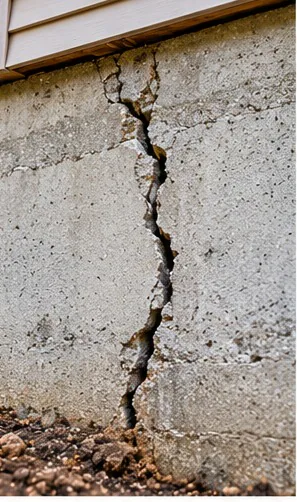
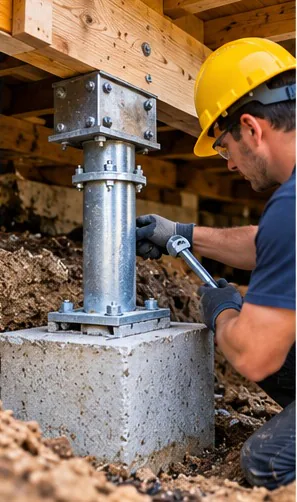
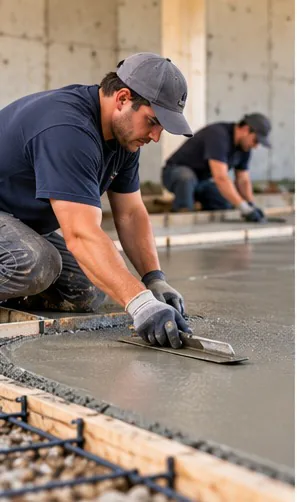
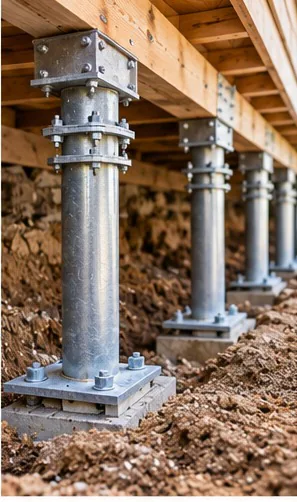
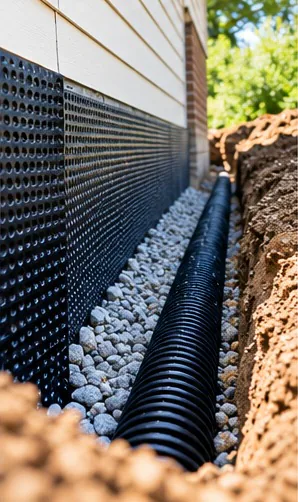
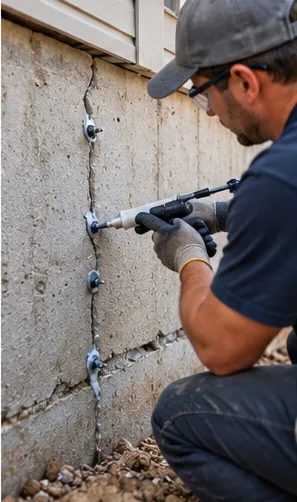
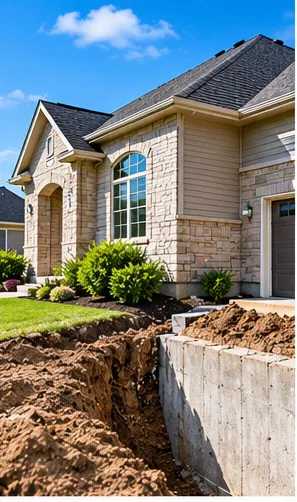
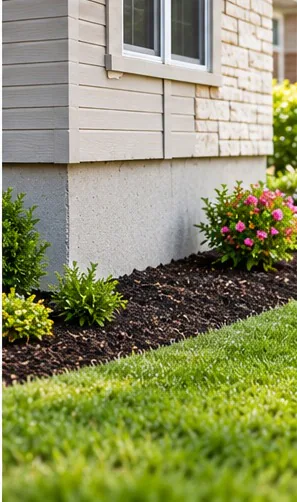
Illustrative images of foundation repair methods. They do not depict this company's own crews, equipment or completed projects.
Each city page covers the county, the soil province, local housing stock and the ZIP codes served — because foundation conditions in Amarillo have very little in common with those in Sugar Land.
Blackland Prairie and Grand Prairie clays — the most severe shrink-swell soils in the state.
Dallas, Fort Worth, Arlington, Plano, Irving, Garland, Frisco, McKinney, Grand Prairie, Denton, Mesquite, Lewisville, Carrollton, Richardson, Allen, Mansfield, Flower Mound, North Richland Hills, Rowlett, Celina
Gulf Coast gumbo clay combined with a high water table and regional subsidence.
Houston, Pasadena, Pearland, League City, Conroe, Sugar Land, Baytown, Missouri City
Blackland clay giving way to the Balcones Escarpment, so conditions change within a few miles.
Blackland clay over the Edwards recharge zone; thin soils in the north, deeper clay east.
Core Blackland Prairie. Houston Black soils with the highest documented plasticity indices.
Coastal clays, shallow water tables and storm-driven drainage loads.
Irrigated deltaic clays where landscape watering drives most moisture change.
Post Oak Savannah claypan subsoils beneath sandier surface horizons.
Caliche and arid soils. Expansive clay is a minor factor; fill and leaks matter more.
Piney Woods sands over clay subsoils, with heavy rainfall and tree-root moisture draw.
Not listed? The campaign covers 50 cities at launch, prioritised by population weighted against clay severity. Call and we will tell you plainly whether a contractor covers your address.
Approximate year built, one or two storeys, and whether it is slab or pier and beam. If you do not know, say so — a crawl space access hatch usually settles it.
When you first noticed it, and whether it has worsened. Seasonal symptoms that come and go point somewhere different from steady deterioration.
Dated photographs of each crack with something for scale. Any previous engineer's report or repair paperwork, including warranties from past work.
Where water stands after rain, whether gutters discharge at the foundation, and whether the water bill has risen unexpectedly.
Texas does not license foundation repair contractors as a trade at state level, so “licensed” can mean different things. Ask the contractor directly for their insurance certificate, their engineering affiliations if they claim any, and references in your city. We do not publish ratings, review counts or credential claims on their behalf.
The questions homeowners actually ask, answered without a sales angle.
Because of the soil, not the construction. Much of populated Texas sits on expansive clay — soil that physically changes volume as its moisture content changes. The Houston Black series of the Blackland Prairie, the Texas state soil, is documented by USDA-NRCS at a plasticity index of 40 to 60. Building codes classify soil as expansive at a plasticity index of 15. Soil surveys record cracks up to four inches wide and six feet deep opening in that clay during extended dry weather.
A house built correctly on stable soil in another state would move here too. The foundation is not failing so much as the ground underneath it is changing shape.
No, and this is where most homeowners are misled. Concrete shrinks as it cures, and fine hairline cracks appearing in the first year or two are usually shrinkage rather than movement. What matters is the pattern and the behaviour: cracks wider than about a quarter inch, cracks that run in a stair-step through brick mortar joints, cracks that are wider at one end, and cracks that measurably change over a season. A crack alone is a symptom. Reading foundation cracks properly is what separates a cosmetic repair from a structural one.
It depends on what you need. A foundation contractor will evaluate and quote a repair. A licensed professional engineer works for you rather than for the repair, and will tell you whether a repair is warranted at all. Engineers typically charge for a report; many contractors evaluate at no cost.
If you have been given a large quote, if you are buying the house, or if two contractors disagree, an independent engineer's report is usually worth what it costs. For a first look at whether anything is actually wrong, a contractor foundation evaluation is a reasonable starting point.
Nobody can answer this honestly without seeing the house, and you should be wary of anyone who tries. Published industry estimates give a range: G.L. Hunt puts pier installation at roughly $1,000 to $3,000 per pier; Thomas Engineering, a Texas professional engineering firm, estimates $8,000 to $25,000 for slab repairs and $6,000 to $15,000 for pier and beam work on a typical home; LevelUp CS quotes $4,000 to $12,000 for slab repair in the DFW area.
Those are third-party figures published by other companies, not quotes from us. The number that matters is the one a contractor gives you after measuring your house. See what actually drives the cost below.
Usually not. Standard Texas homeowners policies generally exclude settlement and earth movement, which is the cause of the large majority of foundation damage in this state. Some policies do cover damage resulting from a sudden plumbing leak beneath the slab, which is a different thing and worth investigating, because an undetected under-slab leak is a common trigger for localised settlement.
Read your own policy rather than relying on what a contractor tells you about it.
It can, and this is the cost most homeowners do not budget for. Supply and drain lines run beneath a slab. When a house is lifted, those lines move with it, and lines already strained by years of settlement can fail. Thomas Engineering notes that under-slab plumbing repairs can equal or exceed the cost of the foundation work itself.
A pre-repair and post-repair hydrostatic plumbing test is a reasonable thing to ask about. It will not prevent a problem, but it establishes what condition the lines were in beforehand.
For a typical residential underpinning job, the physical work is often measured in days rather than weeks, though access, the number of piers and whether tunnelling is required all change that. Interior work through the slab is slower and more disruptive than perimeter work.
The contractor assigned to your call is the only one who can give you a schedule, and that schedule depends on their current workload as well as your house.
Many contractors offer warranties on piers, and some are transferable to a future owner, which matters at resale. Warranties vary a great deal in what they actually promise — whether they cover only the piers installed, whether they cover further movement elsewhere on the house, and what voids them.
Ask for the warranty in writing before work begins and read the exclusions. We do not issue warranties; any warranty is between you and the contractor who performs the work.
Yes, and consistency matters more than volume. The damaging condition is uneven moisture — one elevation saturated while another has dried and shrunk — because the wet side heaves while the dry side settles. The Foundation Performance Association, which publishes foundation maintenance guidance for Texas clay, calls for watering at least a foot out from the wall. Closer than about six inches and the water pools against the beam instead of soaking the soil that carries the load; beyond roughly 24 inches it may never reach that soil at all.
The City of Denton publishes its own homeowner guidance on this. Our drainage and moisture page covers the practice in more detail.
An unrepaired one hurts it more. Foundation movement shows up in a buyer's inspection whether or not it has been disclosed, and at that point it is a negotiating lever against you. A documented repair with a transferable warranty and an engineer's letter is a far easier conversation than visible cracks and no paperwork.
Keep every document: the elevation survey, the scope of work, the warranty, and any engineer's report.
Describe what you are seeing and we will connect you with an independent licensed contractor covering your city.
Call nowCalls connect you with an independent licensed contractor serving your area.